If you’ve ever ordered injection molded parts, you know one simple truth — getting the dimensions right is what separates a perfect fit from a frustrating failure.
At LXG Injection Molding, we work with clients across automotive, medical, electronics, and industrial sectors who all ask the same question:
“How do I make sure my injection molded parts come out dimensionally accurate?”
Let’s dive into the world of dimensioning injection molded parts — what it means, why it matters, and how to get it right when you’re placing an order.
Instant pricing & DFM
Guidance from automotive molding experts
Tight tolerances, complex geometries, and multi-material capabilities
Proven expertise with 3,000+ molds delivered worldwide
What Does “Dimensioning Injection Molded Parts” Mean?
Dimensioning injection molded parts means defining all the critical measurements, tolerances, and geometric features on your CAD drawing that will ensure your part fits, functions, and performs as intended.
It’s not just about length, width, or diameter — it’s about controlling the relationships between surfaces, holes, ribs, and walls after the part is molded, cooled, and ejected.
In other words, dimensioning = communication between your design team and the mold maker.
2. Why Dimensioning Matters in Injection Molding
When you order injection molded parts, your dimensions determine:
-
Fit: Does your part assemble correctly with other components?
-
Function: Does it operate properly under stress, temperature, or pressure?
-
Finish: Does it meet cosmetic and tactile expectations?
-
Cost: Overly tight tolerances can double your tooling cost.
-
Production speed: A poorly dimensioned part may slow down mold approval or require multiple iterations.
At LXG Injection Molding, we’ve seen designs where just a 0.1 mm mistake led to misaligned assemblies — and thousands in rework costs.
That’s why we help customers optimize dimensions before cutting steel.
3. The Golden Rule: Design for Manufacturability (DFM)
Dimensioning injection molded parts isn’t only about your CAD model — it’s about understanding how plastic behaves during molding.
Here’s what happens inside the mold:
-
Hot plastic resin is injected under pressure.
-
It fills the mold cavity.
-
It cools and shrinks as it solidifies.
That shrinkage — usually 0.4% to 1.8% depending on the resin — directly affects your final dimensions.
That’s why LXG’s engineers always perform a DFM (Design for Manufacturability) review before mold production. We analyze your CAD to predict:
-
Shrinkage ratios
-
Warp tendencies
-
Draft angles
-
Wall thickness variations
So your part dimensions remain stable after molding, not just on the computer.
4. Common Dimensioning Challenges (and How to Fix Them)
A. Shrinkage and Warpage
All plastics shrink when they cool, but uneven wall thickness can cause warping.
Solution:
-
Keep wall thickness uniform (±10% variation max).
-
Add ribs instead of thick walls for strength.
-
Let LXG run a mold flow simulation to predict shrinkage before cutting the mold.
B. Draft Angles Too Tight
Without enough draft, parts stick to the mold, causing dimensional distortion.
Solution:
-
Apply 1° to 2° draft angles on vertical faces.
-
Textured surfaces need slightly more (up to 5°).
C. Overly Tight Tolerances
Specifying ±0.01 mm on a large plastic housing adds cost and risk.
Solution:
-
Define critical-to-function dimensions tightly.
-
Relax tolerances elsewhere.
-
Trust your mold maker to suggest achievable specs.
D. Improper Gate or Ejector Placement
Poor gate design can cause sink marks or stress warps that affect size.
Solution:
-
LXG uses simulation software to optimize gate and ejector layout for uniform filling.
5. Understanding Tolerances for Injection Molded Parts
When dimensioning injection molded parts, tolerance = the allowable variation between nominal design and actual production.
Tolerances depend on:
-
Material type (ABS, PP, Nylon, PC, etc.)
-
Part size and geometry
-
Mold precision and maintenance
-
Cooling and processing conditions
Here’s a general guide:
| Dimension Range | Typical Tolerance | Notes |
|---|---|---|
| 0–10 mm | ±0.05 mm | High-precision parts |
| 10–100 mm | ±0.1 mm | Standard consumer parts |
| 100–250 mm | ±0.2 mm | Large housings or casings |
At LXG Injection Molding, we often hold even tighter tolerances using high-precision CNC machining, CMM validation, and SPC control during production.
6. The Role of GD&T (Geometric Dimensioning & Tolerancing)
If you’ve seen symbols like Ⓜ, Ⓟ, or Ⓣ on a drawing — that’s GD&T.
GD&T helps define form, orientation, location, and runout of features that affect how parts fit together.
For injection molded parts, common GD&T symbols include:
-
Flatness (⏥) for mating surfaces
-
Parallelism (∥) for alignment
-
Position (⍇) for hole locations
-
Circularity (○) for shafts and bosses
Using GD&T correctly allows LXG’s mold makers to maintain functional precision while keeping costs reasonable.
7. How LXG Helps You Get Dimensions Right
When you work with LXG Injection Molding, you don’t have to be an expert in plastics — we handle that for you.
Here’s how we ensure your parts meet dimensional specs:
-
Design Review & DFM Analysis
We review your CAD model to identify potential tolerance risks before mold creation. -
Material Consultation
We help you choose resins with predictable shrinkage and stability — like PC, ABS, or glass-filled Nylon. -
Mold Flow Simulation
Using software, we simulate how resin fills and cools inside the mold to predict dimensional changes. -
Precision Tooling
Our in-house CNC and EDM machining ensures exact mold cavity geometry. -
Trial Runs & CMM Reports
We produce sample parts, measure them using Coordinate Measuring Machines, and share full inspection data. -
Continuous Process Control
During mass production, our SPC monitoring maintains repeatable part dimensions.
The result? Parts that fit perfectly — every single time.
8. Best Practices for Buyers Ordering Dimensionally Accurate Parts
If you’re planning to order injection molded parts, here are key tips to save time and cost:
✔ Provide Detailed CAD Drawings
Include all critical dimensions, tolerances, and GD&T where applicable.
✔ Identify Functional Areas
Tell your manufacturer which dimensions matter most for fit or performance.
✔ Be Realistic About Tolerances
Overly tight tolerances can increase tool cost by 30–50%. LXG helps you balance precision with budget.
✔ Select the Right Material Early
Material shrinkage affects final size — ABS, PC, and PP each behave differently.
✔ Ask for a DFM Report
Before mold production, request a Design for Manufacturability analysis. LXG provides this for every order.
✔ Review First Article Inspection (FAI)
Inspect trial samples and verify dimensions before full-scale production.
9. Dimensioning for Multi-Cavity and Family Molds
If you plan to produce multiple parts in one mold, dimensioning becomes even more critical.
Multi-Cavity Molds:
-
All cavities must be identical to ensure consistent part size.
-
LXG uses precision machining and laser alignment to maintain cavity uniformity.
Family Molds:
-
Different parts share one mold base.
-
Proper dimensioning ensures each part fills correctly without distortion.
Our engineers use simulation and CMM verification to ensure dimensional balance across all cavities.
10. Inspection and Validation: How LXG Ensures Dimensional Accuracy
Even the best designs need validation. LXG’s quality process includes:
-
First Article Inspection (FAI): Complete dimensional verification on initial samples.
-
CMM Measurement: 3D coordinate scanning of critical features.
-
SPC Monitoring: Statistical tracking during mass production.
-
Tool Maintenance Logs: Regular inspection of molds to prevent wear-induced size drift.
This multi-step process guarantees that dimensioning injection molded parts stays consistent through thousands or millions of cycles.
11. The Cost of Getting Dimensions Wrong
Let’s be honest — dimension mistakes can be expensive.
A misaligned hole or warped housing could mean:
-
Reworking the mold ($2,000–$10,000+)
-
Assembly failure in final products
-
Lost time-to-market
By investing in proper dimensioning, tooling precision, and validation, you save far more than you spend upfront.
LXG’s motto: Measure twice, mold once.
12. Dimensioning Tips from LXG’s Engineers
Here are a few insider tips our team shares with clients:
-
Label datums clearly — they’re your reference points.
-
Avoid stacking tolerances — align key dimensions to a single datum.
-
Use radii instead of sharp corners — it improves mold flow and dimensional control.
-
Add draft early — 1–2° saves costly mold modifications later.
-
Communicate! — send 3D models and 2D drawings for clarity.
13. How to Get Started with LXG Injection Molding
Ordering dimensionally accurate parts is easier when your partner knows what to look for.
Here’s how it works with LXG:
-
Share your 3D CAD files and technical drawings.
-
We perform a free DFM review and provide recommendations.
-
You receive a detailed quote and timeline.
-
We build your precision mold, run sample parts, and share measurement data.
-
Once approved, we start full-scale production and deliver globally.
Our team guides you through every step, ensuring your dimensions stay consistent, compliant, and cost-effective.
14. Why Choose LXG Injection Molding?
-
20+ years of industry experience
-
ISO 9001 & ISO 13485 certified
-
3,000+ molds delivered worldwide
-
40+ countries served
-
100+ plastic materials supported
-
No minimum order quantity
-
Prototypes in 5–7 days, production in 3–5 weeks
LXG is not just a manufacturer — we’re your engineering partner, helping you achieve design precision without production headaches.
15. Final Thoughts
Dimensioning injection molded parts may sound technical, but it’s the foundation of reliable product design. When done correctly, it:
-
Reduces waste
-
Improves assembly fit
-
Cuts lead time
-
Keeps costs predictable
Whether you’re designing your first prototype or scaling up for global production, LXG Injection Molding ensures your dimensions are not just accurate — they’re manufacturable, measurable, and repeatable.
👉 Ready to get started?
Visit LXG Injection Molding and request a free DFM and quote for your next project.
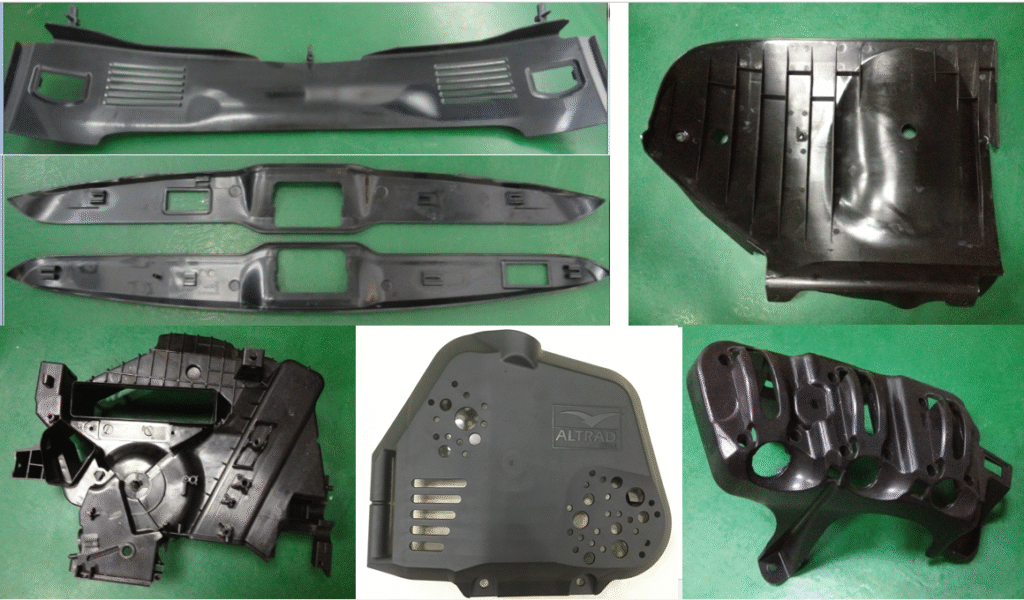
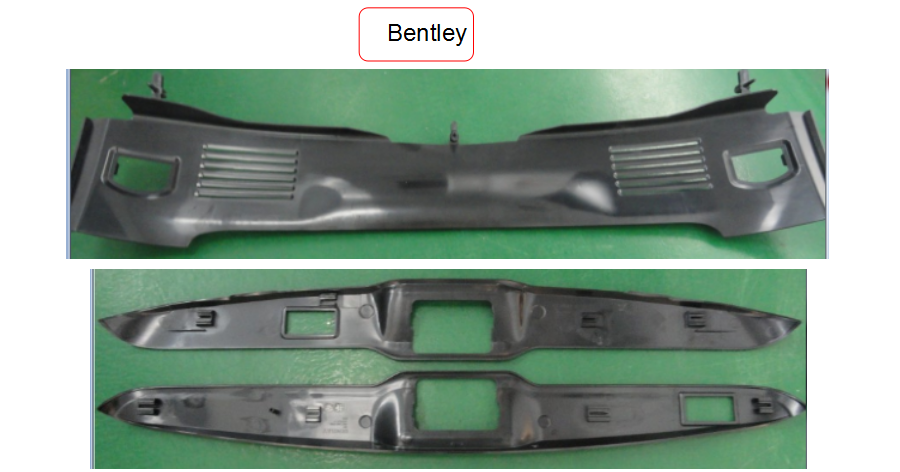
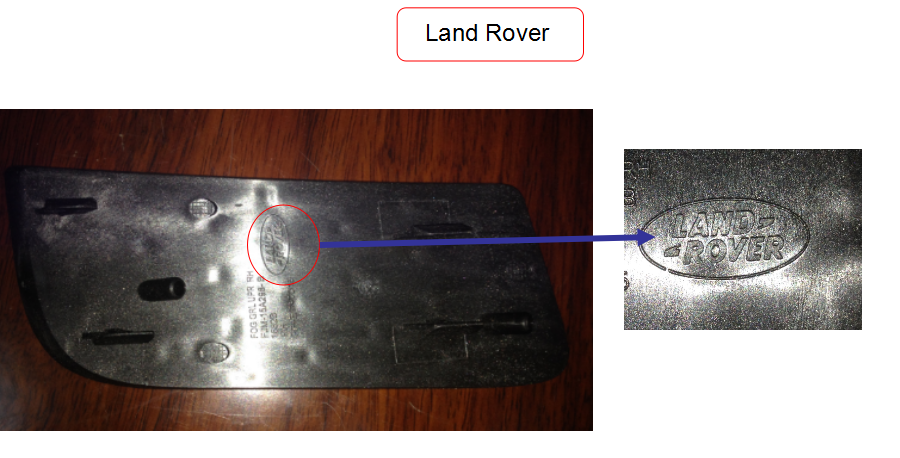
Our Work
Get Instant Price, Projects lead time and DFM Feedback
Our Partners






 20+ Years Experience